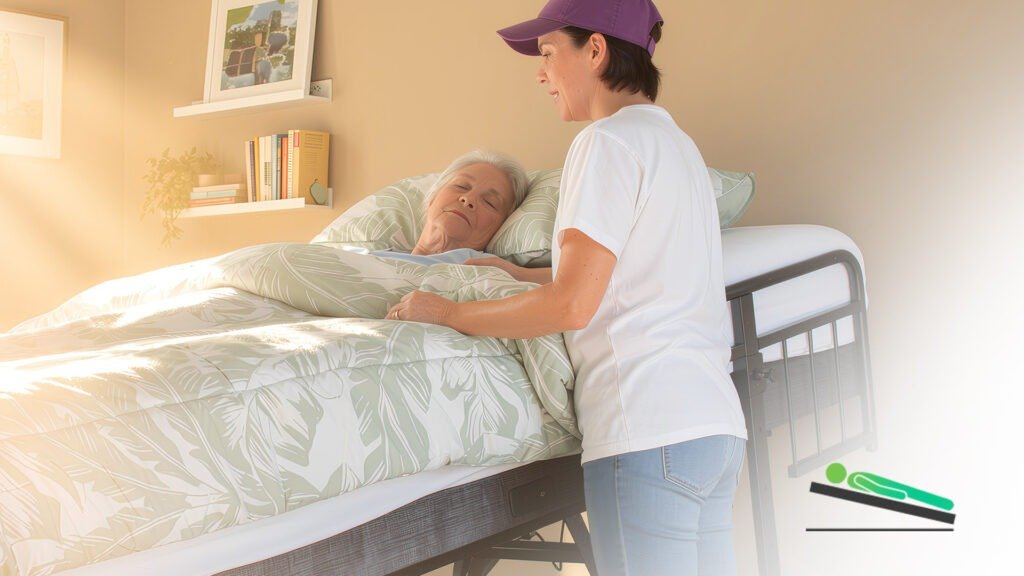
Supporting elderly Australians at home often requires careful attention to safe transfers and positioning. Traditional lifting or manual adjustments can place carers at risk of strain or injury. A voice control adjustable bed with hi-low functionality provides a hands-free solution, making daily transfers safer, easier, and more efficient for both carers and patients.
Introduction: Why Safe Transfers Matter in Homecare
Transfers from bed to wheelchair, chair, or standing position are common tasks in homecare. For elderly Australians:
- Manual lifting can increase the risk of falls and injury
- Limited mobility may restrict their ability to move independently
- Carers may experience back, shoulder, or joint strain from repeated handling
Using a bed with hi-low adjustments operated via voice commands reduces these risks while supporting safe and comfortable care.
Understanding Hi-Low Adjustable Beds
Hi-low adjustable beds are designed to:
- Raise or lower the entire bed height for optimal transfer positioning
- Allow smooth transitions from lying down to sitting or standing
- Reduce the need for carers to bend, lift, or awkwardly reach
These beds are particularly suitable for mobility beds for elderly in Victoria, NDIS-approved adjustable beds, and SWEP-approved assistive beds.
Learn more about the Voice-Control Homecare Hi-Low Bed designed for safe homecare and allied health use.
Voice-Control Features for Easy Height Adjustment
Voice-enabled beds allow patients or carers to adjust height effortlessly, providing:
- Hands-free operation: No need to manually use a remote or lever
- Precise hi-low adjustment: Achieve the safest transfer height every time
- Backrest and leg elevation: Supports proper alignment and comfort during transfers
- Quick responses: Instant adjustment reduces the chance of imbalance or falls
Voice commands make these beds ideal for both homecare settings and aged care facilities, improving safety and efficiency.
Benefits for Carers and Elderly Australians
Using a voice control adjustable bed with hi-low functionality offers several advantages:
- Reduced risk of injury: Carers can avoid heavy lifting or awkward bending
- Supports safe mobility: Patients experience smoother, safer transfers
- NDIS and SWEP approved assistive beds: Eligible for funded support programs
- Occupational therapist recommended: Promotes best practice for ergonomic care
- Improves independence: Patients can make small adjustments themselves, reducing carer reliance
These benefits enhance the wellbeing of both carers and patients while maintaining a safe homecare environment.
Hire vs Purchase Options
Australian families and carers have flexible options for accessing voice-controlled hi-low beds:
- Hire: Perfect for temporary care, post-surgery recovery, or short-term needs. View hire options
- Rental enquiry: Test and trial before committing. Submit rental enquiry
- Purchase: For permanent homecare use. Explore product page
These options ensure families can access the appropriate assistive technology without large upfront costs.
Practical Tips for Home Use
- Ensure the bed is positioned to allow safe wheelchair or chair transfers
- Encourage patients to use voice commands whenever possible for independence
- Combine bed adjustments with OT- or physiotherapist-recommended exercises for safe mobility
- Use slow, controlled adjustments during transfers to reduce fall or strain risks
These simple practices maximize safety and efficiency during daily care routines.
Conclusion
A voice control adjustable bed with hi-low functionality is an essential tool for improving safety during transfers in Australian homecare. It reduces carer strain, promotes patient independence, and supports safe positioning, all while meeting NDIS/SWEP requirements and occupational therapy recommendations. Families and homecare providers can access these beds through hire, rental, or purchase options, ensuring practical support for daily care.