
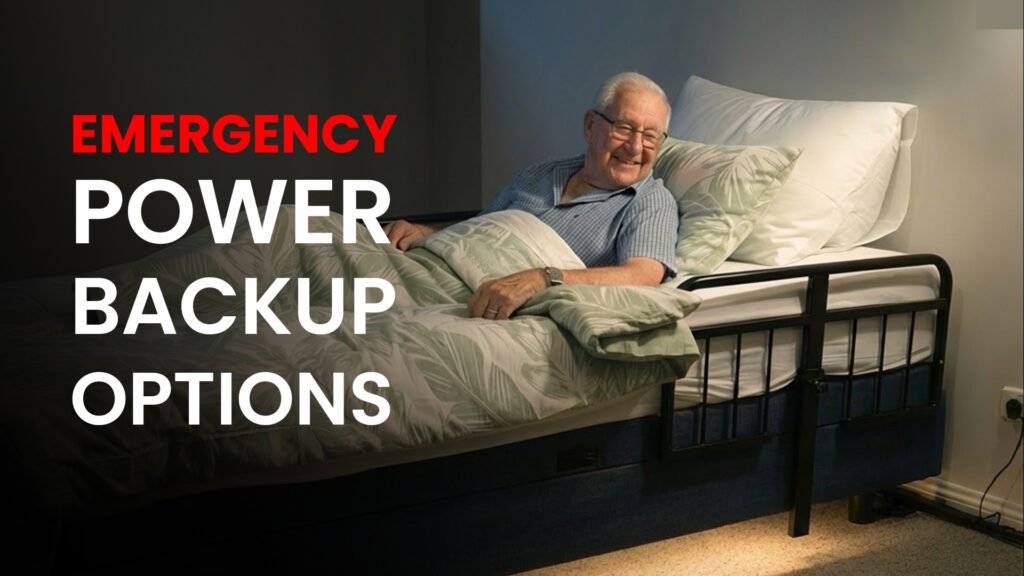
Safety is the foundation of quality homecare. For older Australians, NDIS participants, and people with mobility limitations, the right equipment can mean the difference between independence and risk. One critical but often overlooked aspect of homecare safety is emergency power backup, especially when using an electric or voice control adjustable bed.
Power outages—whether caused by storms, heatwaves, or infrastructure issues—can disrupt essential equipment. For people relying on hi low adjustable beds for mobility, transfers, and pressure management, uninterrupted functionality is not a luxury; it is a safety requirement.
Introduction: Ensuring Safety in Homecare Environments
Australian homecare standards place strong emphasis on risk reduction, dignity, and continuity of care. This includes ensuring that essential assistive technology continues to function during emergencies.
Beds used in aged care beds Victoria settings or disability care beds for home use are expected to support users at all times—not just when power is available. Emergency power backup ensures that users are never left in unsafe positions and carers can continue providing support without added risk.
Understanding Emergency Power Backup for Homecare Beds
Emergency power backup refers to systems that allow electric beds to function during power interruptions. This can include built-in battery systems, external battery backups, or compatible uninterruptible power supply (UPS) units.
For an electric adjustable bed for elderly users, backup power allows:
- Safe lowering of the bed during outages
- Continued access to voice or electric controls
- Reduced panic and risk during emergencies
In homes where assistive beds are used daily, backup power is increasingly seen as part of responsible care planning.
Australian Homecare Safety Standards
Key Compliance Requirements
Australian aged care and NDIS frameworks prioritise:
- Fall prevention
- Safe transfers
- Reduction of manual handling risks
- Continuity of essential supports
Beds are a central piece of this safety puzzle. When power is lost, a bed stuck in a raised position can increase fall risk or prevent carers from assisting safely.
Role of Emergency Backup in Aged Care
For aged care electric beds and NDIS approved adjustable beds, emergency backup supports compliance by ensuring the bed can still be adjusted to a safe height. This is especially important for users with limited mobility or high support needs.
Occupational therapists increasingly factor power reliability into their equipment recommendations, particularly in regional or storm-prone areas of Victoria.
How Voice-Control Beds Support Safety Standards
Maintaining Function During Power Outages
A voice control adjustable bed with emergency backup ensures that essential positioning functions remain available even when mains power fails. This allows users to:
- Lower the bed safely
- Adjust posture to relieve discomfort
- Maintain access to transfers and care
This continuity supports both safety and dignity.
Enhancing Independence and Mobility
Voice control remains a critical feature for users with limited hand function, pain, or fatigue. Combined with emergency backup, smart homecare beds continue supporting independence even during unexpected disruptions.
This is particularly valuable for mobility beds for elderly in Victoria where carers may not always be immediately available.
Reducing Carer Risk and Strain
Without backup power, carers may be forced to manually manage positioning, increasing the risk of injury. Emergency-supported beds reduce manual handling demands and help carers work within safe practice guidelines.
Choosing the Right Emergency Power Solutions
Battery Backups
Some beds include integrated batteries that allow several adjustments during an outage. These are ideal for short interruptions and everyday reliability.
UPS Systems
Uninterruptible power supply units can be paired with hi low adjustable beds to provide temporary power. These are commonly used in homecare beds with voice control for NDIS participants.
Generators
For homes with frequent outages or higher support needs, generators may be considered as part of a broader emergency plan. While not always necessary, they offer extended coverage for multiple devices.
Integration With Hi-Low Adjustable Beds
Not all beds are compatible with backup systems. It is essential to choose assistive technology beds Victoria providers that understand safety compliance and proper integration.
Hire, Rental, and Purchase Options in Victoria
Assistive Tech Hub offers flexible options to suit different care needs and safety requirements.
For long-term use, the voice-controlled homecare hi-low bed is designed to meet homecare and compliance needs:
product page
Short-term hire options allow families and providers to trial equipment or cover recovery periods:
hire options
Rental solutions support temporary needs, respite care, or pending funding approvals:
rental enquiry
For guidance on safety planning, compliance, or equipment selection, personalised support is available:
Cotact us
Conclusion
Emergency power backup is no longer optional in modern homecare—it is a core safety consideration. When paired with a voice control adjustable bed, it ensures continuity of care, protects users during outages, and supports carers to work safely and confidently.
True homecare safety is not about reacting to emergencies—it is about being prepared so independence, comfort, and dignity are never switched off.