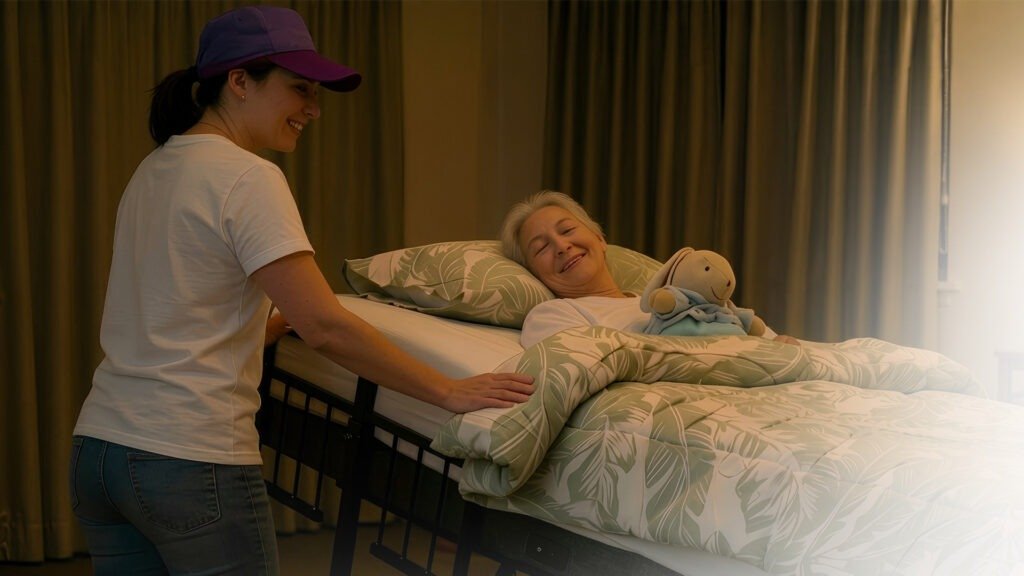
Night-time care can be one of the most physically and mentally demanding parts of caring for elderly or disabled Australians. Tasks like repositioning, lifting, and assisting with mobility often disrupt both the carer’s rest and the patient’s comfort. A voice control adjustable bed offers a hands-free solution that eases this burden, providing safer, smoother, and more independent night-time care.
Introduction: Night-Time Challenges for Carers
Caring for elderly or mobility-impaired Australians during the night presents several challenges:
- Frequent need to reposition or adjust the bed
- Risk of manual handling injuries from lifting or supporting patients
- Disturbing patients’ sleep during necessary adjustments
- Fatigue and stress accumulation for carers
Traditional bed remotes can be cumbersome or difficult to use, particularly when carers are tired. Voice-controlled beds allow carers to perform essential adjustments without lifting or bending, reducing physical strain and improving overall efficiency.
What Is a Voice-Controlled Hi-Low Adjustable Bed?
A voice-controlled hi-low bed is an electric bed that allows both the patient and carer to adjust bed height, backrest, and leg elevation through simple voice commands. Key features include:
- Hands-free bed adjustment, eliminating the need for remotes or physical strain
- Hi-low height adjustment for safer transfers and ergonomic handling
- Smooth and precise articulation of head, back, and legs
- NDIS and SWEP-approved assistive technology designed for homecare
Learn more about the Voice-Control Homecare Hi-Low Bed specifically designed for carers and patients in Australia.
Benefits for Carers
Implementing voice-controlled beds offers clear advantages for carers:
- Reduced manual handling and lifting: Minimises risk of injury during night-time care
- Improved efficiency: Adjust bed positions instantly without disrupting sleep
- Supports occupational health and safety: OT-recommended beds ensure ergonomic handling
- Reduces fatigue: Hands-free operation helps carers conserve energy during night shifts
These benefits make night-time care safer, less stressful, and more sustainable for carers, whether in family homes or aged care settings.
Benefits for Patients and Elderly Users
Voice-control beds also directly improve the experience for patients:
- Maintains comfort and safety: Smooth movements prevent discomfort and accidental falls
- Supports independence: Patients with sufficient mobility can adjust positions without assistance
- Reduces sleep disruptions: Gentle, precise movements allow adjustments without waking the patient
- Promotes better rest and recovery: Essential for elderly Australians and NDIS participants with mobility or health limitations
By combining patient comfort and carer safety, voice-controlled beds create a more harmonious and effective care environment.
Options for Purchase or Hire
Families and care providers can choose from flexible solutions to suit different needs:
- Purchase: Ideal for long-term homecare setups. View product
- Hire: Suitable for temporary care, recovery periods, or trial purposes. View hire options
- Rental enquiry: Explore flexible options for short-term needs. Submit rental enquiry
These options ensure carers can access high-quality assistive technology without long-term commitment.
Tips for Implementing Voice-Control Beds in Homecare
- Position the bed for easy access from both sides to facilitate safe care
- Encourage carers and patients to use voice commands for all adjustments to preserve energy and reduce strain
- Integrate the bed into routine night-time care to minimise sleep interruptions
- Schedule regular maintenance and check voice-recognition functionality for reliable performance
Following these strategies maximises both safety and efficiency for carers and patients alike.
Conclusion
A voice control adjustable bed is a transformative tool for night-time carers in Australia. It reduces manual handling risks, promotes patient comfort, supports independence, and eases carer workload. With options to hire or purchase, these beds provide practical, safe, and flexible solutions for homecare environments and NDIS participants.