
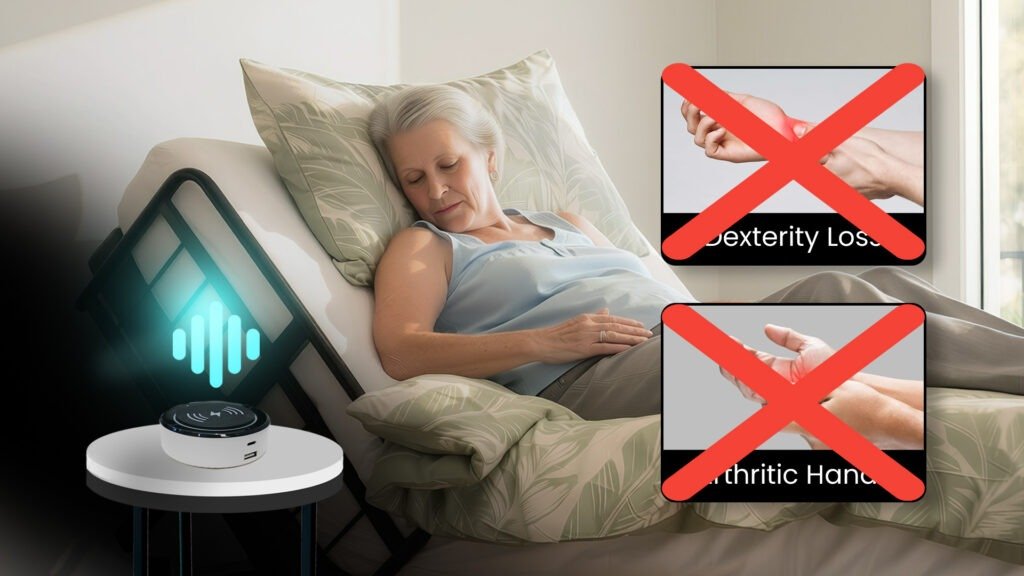
Many seniors face challenges adjusting their beds due to arthritis, limited hand strength, or dexterity loss. Traditional small remotes can be difficult or even painful to use. A voice control adjustable bed provides a hands-free solution, allowing seniors to safely adjust their bed for comfort, independence, and mobility without relying on hand strength.
Introduction: Challenges of Dexterity Loss in Seniors
Seniors with arthritic hands or limited dexterity often experience:
- Difficulty pressing small buttons on standard remotes
- Pain or fatigue when performing daily bed adjustments
- Reduced independence in managing sleep and positioning
- Increased reliance on carers for basic bed adjustments
These challenges can impact safety, comfort, and quality of life. Voice-operated beds provide a practical solution for these daily struggles.
Understanding Voice-Controlled Hi-Low Adjustable Beds
Voice-controlled hi-low beds allow users to adjust bed height, backrest, and leg elevation simply by speaking commands. Key features include:
- Hands-free operation: No need to use buttons or levers
- Hi-low adjustment: Optimises bed height for safe transfers
- Back and leg elevation: Supports comfort during rest, sleep, or recovery
- Smooth, precise movements that reduce strain or risk of injury
Learn more about the Voice-Control Homecare Hi-Low Bed designed for seniors with mobility and dexterity limitations.
Benefits for Seniors with Limited Hand Mobility
Using a voice control adjustable bed offers seniors several advantages:
- Easier bed adjustments without remote: Speak a command instead of struggling with buttons
- Supports comfort: Find the optimal position for rest, sleep, or pain relief
- Promotes independence: Reduce reliance on carers for daily adjustments
- Enhances safety: Smooth transitions reduce the risk of falls or strain
This technology allows seniors to maintain autonomy and confidence in their homecare environment.
Advantages for Carers and Family Members
Carers and family members also benefit from voice-controlled beds:
- Reduced manual handling: Less physical effort is needed to reposition patients
- Supports safe transfers: Hi-low adjustment ensures optimal height for wheelchair or chair transfers
- Occupational therapist recommended: Encourages ergonomic care practices and reduces injury risk
These advantages help maintain safety and efficiency in homecare settings while improving overall wellbeing for both carers and seniors.
Options for Purchase or Hire
Families and homecare providers can access voice-operated beds through flexible options:
- Purchase: Ideal for long-term home use. View product
- Hire: Perfect for short-term needs, post-surgery recovery, or trial use. View hire options
- Rental enquiry: Test the bed before committing to purchase. Submit rental enquiry
These options ensure seniors can access the right assistive technology for their needs without barriers.
Practical Tips for Using Voice-Control Beds at Home
- Place the bed in a clear space to allow safe movement during transfers
- Encourage seniors to use voice commands for all adjustments to preserve hand strength
- Combine bed use with OT-guided exercises to maintain mobility and independence
- Regularly check bed functionality and voice recognition to ensure smooth operation
These practices maximise safety, comfort, and independence for seniors using voice-controlled beds.
Conclusion
A voice control adjustable bed is an essential tool for seniors with dexterity loss or arthritis. It empowers them to make bed adjustments independently, reduces strain on hands and arms, and enhances safety for both seniors and carers. With options to hire or purchase, these beds offer practical, flexible solutions for homecare, NDIS participants, and aged care environments.